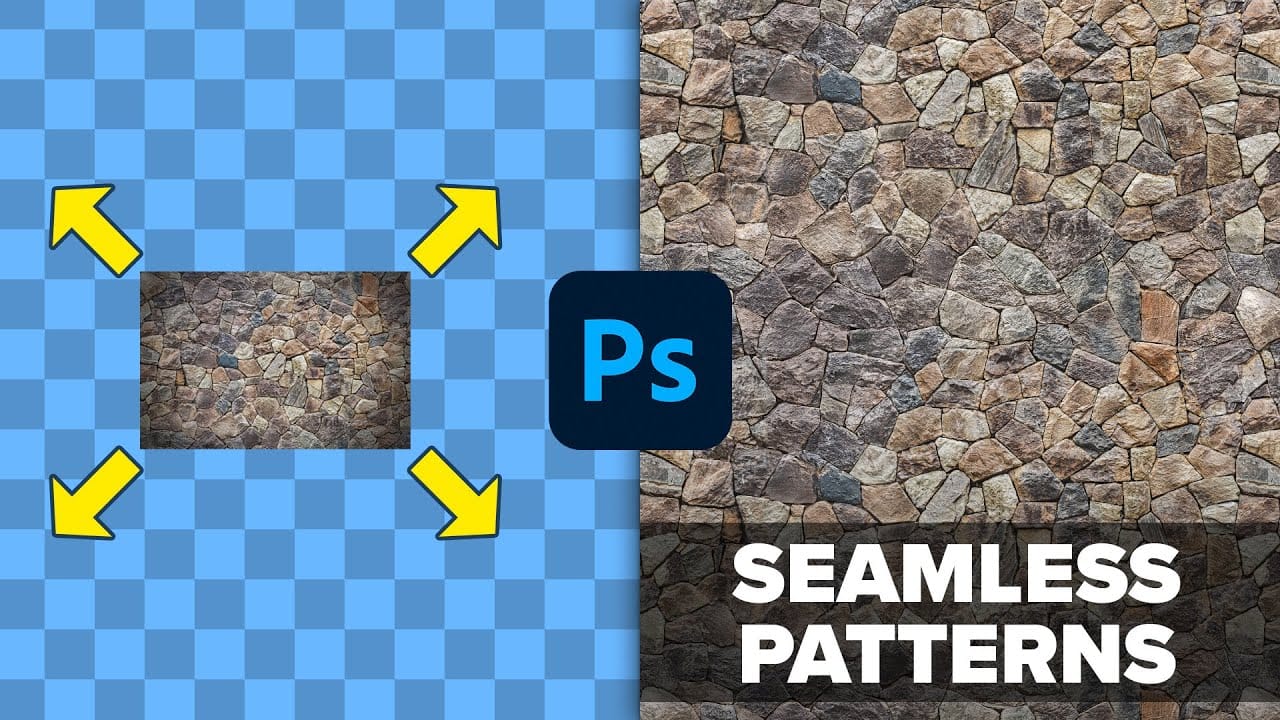
Using AI to Create Seamless Patterns For Photoshop

Using AI to Create Seamless Patterns For Photoshop

Creating beautiful, endless patterns for your design projects just got easier with the power of artificial intelligence. This tutorial explores an efficient workflow to generate intricate designs and transform them into perfectly tiling patterns.

Discover how to leverage AI tools to craft unique starting points, then refine them within Photoshop to achieve professional, seamless results. This process offers a creative boost for backgrounds, textiles, and other visual assets.

Watch the Full Tutorial

Video by Brendan Williams. Any links or downloads mentioned by the creator are available only on YouTube

Integrating AI Generation and Photoshop Refinement for Patterns

The creation of seamless patterns benefits significantly from a blended approach, combining the rapid ideation of AI with the precise control of traditional image editing software. AI platforms like Adobe Firefly excel at generating diverse graphic styles based on descriptive prompts, providing an initial creative spark that might otherwise take hours to conceptualize. However, achieving true seamlessness and rectifying subtle imperfections often requires a human touch.

This workflow highlights how a designer becomes a curator and editor, using AI as a powerful assistant rather than a full replacement. It underscores the importance of thoughtful prompt engineering to guide the AI towards desirable outcomes, such as specifying *Vector leaves*, *pastel tones*, and crucially, *repeating pattern*. Subsequent refinement in Photoshop addresses the inevitable artifacts and ensures that the final design tiles flawlessly without noticeable seams or anomalies. This iterative process of generation and meticulous adjustment ensures high-quality, production-ready patterns.

  • AI as a starting point: Generating initial designs.
  • Specific AI prompts: Guiding style and structure.
  • Offset filter: Revealing pattern seams in Photoshop.
  • Generative Fill: Automatically resolving inconsistencies.
  • Manual cleanup: Refining details with tools like the Remove Tool.

Practical Tips for Seamless Pattern Creation

  • Start your pattern design in AI tools like Adobe Firefly, as its generation excels for repeating patterns compared to Photoshop's native image generation feature.
  • Craft highly specific prompts for AI, including details on colors, object style (e.g., Vector leaves), and crucially, the phrase repeating pattern for edge-to-edge designs.
  • Apply Photoshop's Filter > Other > Offset with Wraparound enabled to expose the pattern's tiling edges, making visible any areas needing adjustment.
  • Use the Generative Fill tool across the exposed seams in Photoshop to automatically blend overlapping sections and remove visible lines.
  • Refine minor imperfections and clean up unwanted elements using the Remove Tool on a new layer, ensuring Sample All Layers is active for non-destructive edits.
  • Duplicate existing design elements using the Lasso Tool and Ctrl/Cmd + J to fill blank areas, then blend them seamlessly into the pattern.

More Tutorials about Seamless Patterns

Explore additional techniques and creative approaches to mastering seamless pattern design in Photoshop with these related resources.
Creating Seamless Patterns in Photoshop
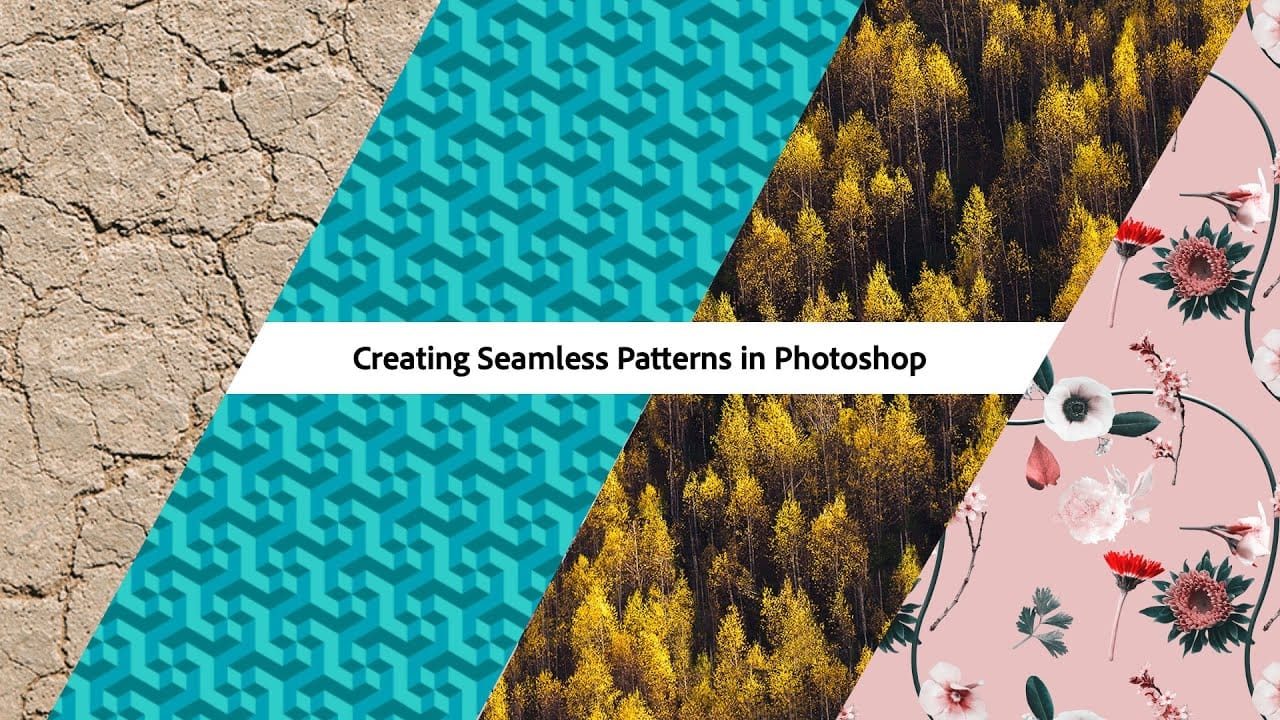
In this tutorial, Adobe Evangelist Paul Trani delves into the process of creating seamless patterns in Photoshop. Seamless patterns are essential for various design projects, from backgrounds to textiles, and mastering them can significantly enhance your design capabilities. Paul takes you through the entire process, from setting up your initial design to ensuring that the pattern tiles seamlessly across any surface. He covers essential techniques such as defining pattern edges, adjusting spaci
How to create seamless patterns in Photoshop with graphics or images
If you want to learn how to make a pattern in photoshop, this tutorial will share how to create a seamless repeating pattern with both graphics and an image. This way you can design a pattern for your digital art, printing, or graphic design, while also saving textured patterns from images to use in your composites and photo manipulations! With the help of the Offest filter, this entire process of making a pattern in photoshop is surprisingly simple and is an awesome way to add more creative as
Create AI Art inside Photoshop with Stable Diffusion
Introducing Stable Art – a novel plugin for Photoshop that lets you harness the power of your local Stable Diffusion setup within the software. This plugin is completely free and can be installed and utilized with utmost ease. Despite being fairly basic at the moment, it provides all the fundamental features needed to begin painting with Stable Diffusion models right inside Photoshop. F Follow along with this video as I demonstrate the installation process for this plugin on ANY version of Phot
3 Powerful Techniques to Create Seamless Patterns in Photoshop
This tutorial by Jesus Ramirez from the PTC Photoshop Training Channel introduces three effective techniques for creating seamless patterns in Photoshop. If you have ever wanted to transform a simple photo into a beautiful repeating design, this is a great place to start. You will become familiar with essential tools such as Pattern Preview and Generative Fill, which are crucial in this process. These tools will help simplify your workflow and enhance your designs. Additionally, you will discov

Get tutorials & freebies delivered to you.

Subscribe to the Photoshop Roadmap newsletter, a weekly roundup of new tutorials, insights and quality downloads, trusted by 6500+ readers.

You might also like

How to Create Circle Cropped Photos with Transparent Backgrounds in Photoshop

Circular cropping transforms standard photographs into clean, professional profile images perfect for websites, social media, and presentations. The frame tool method creates non-destructive crops with transparent backgrounds that export seamlessly across different platforms. This streamlined workflow eliminates the need for complex selections or masks while maintaining full control over image...

How to Use Generative Upscale to Restore and Enhance Low-Resolution Images in Photoshop

Low-resolution images often limit your creative projects, especially when you need sharp prints or high-quality displays. Photoshop's Generative Upscale feature transforms small, pixelated photos into crisp, detailed images using AI-powered enhancement. This tool offers three distinct AI models, each designed for specific image types—from landscapes and portraits...

How to Use Harmonize to Automatically Match Lighting in Photoshop Composites

Creating seamless composites traditionally requires hours of manual color correction and lighting adjustments. The new Harmonize tool changes this by automatically analyzing your background and matching your subject's lighting, shadows, and color tones with a single click. This AI-powered feature eliminates the need for complex adjustment layers and...

How to Use Adobe Photoshop in ChatGPT for Photo Editing

Adobe Photoshop is now integrated directly into ChatGPT, allowing you to edit photos using simple text descriptions. This new feature lets you enhance images, apply creative effects, and make targeted adjustments without needing a Photoshop subscription. You can describe what you want to change and fine-tune adjustments using familiar Photoshop...

How to Fix Skin Tones in Photoshop - Complete Guide

Skin tones can make or break a portrait, yet color casts and uneven lighting often leave subjects looking unnatural or flat. Whether dealing with mixed lighting conditions, camera white balance issues, or post-processing mishaps, getting skin colors right requires a systematic approach that works consistently across different scenarios. This comprehensive...

You’ve successfully subscribed to Photoshop Roadmap
Welcome back! You’ve successfully signed in.
Great! You’ve successfully signed up.
Success! Your email is updated.
Your link has expired
Success! Check your email for magic link to sign-in.