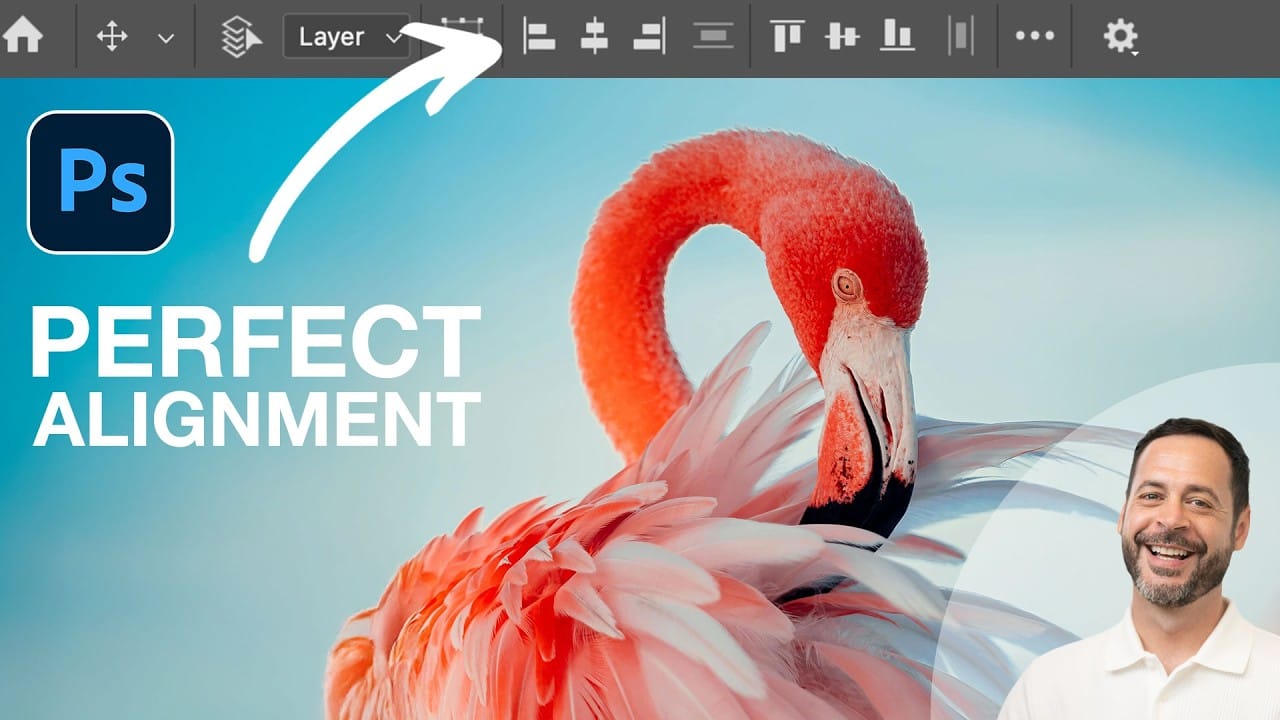
When working with multiple layers that need perfect alignment, manual positioning often falls short. Slight camera movement, different crops, or rotated images can make precise alignment seem impossible through visual adjustment alone.
Auto Align Layers automatically handles rotation, scaling, and positioning to create perfect layer alignment, even when images have different dimensions or orientations.
Watch the Video
Video by Glyn Dewis. Any links or downloads mentioned by the creator are available only on YouTube
Practical Tips
These techniques will help you achieve perfect layer alignment every time:
- Select both layers in the Layers panel before accessing Edit > Auto Align Layers
- Use Difference blend mode to verify alignment - black areas indicate identical pixels
- Leave Auto Align settings on "Auto" for best results in most situations
- Lower the top layer's opacity temporarily when manually aligning with the Move tool
- Apply a black layer mask with Alt/Option + click to hide layers before selective brushing
Related Articles and Tutorials
Explore more layer alignment and positioning techniques:
How to Use Photoshop's Alignment Tools for Perfect Object Placement
Perfect alignment transforms amateur-looking designs into polished, professional layouts. When text floats awkwardly or elements appear randomly scattered, the entire composition suffers. Photoshop's alignment tools eliminate guesswork and create visual harmony with mathematical precision.
These tools work with individual layers, groups, and selections to position elements exactly where they belong. Master these techniques to build consistent, balanced designs that look intentional rather than
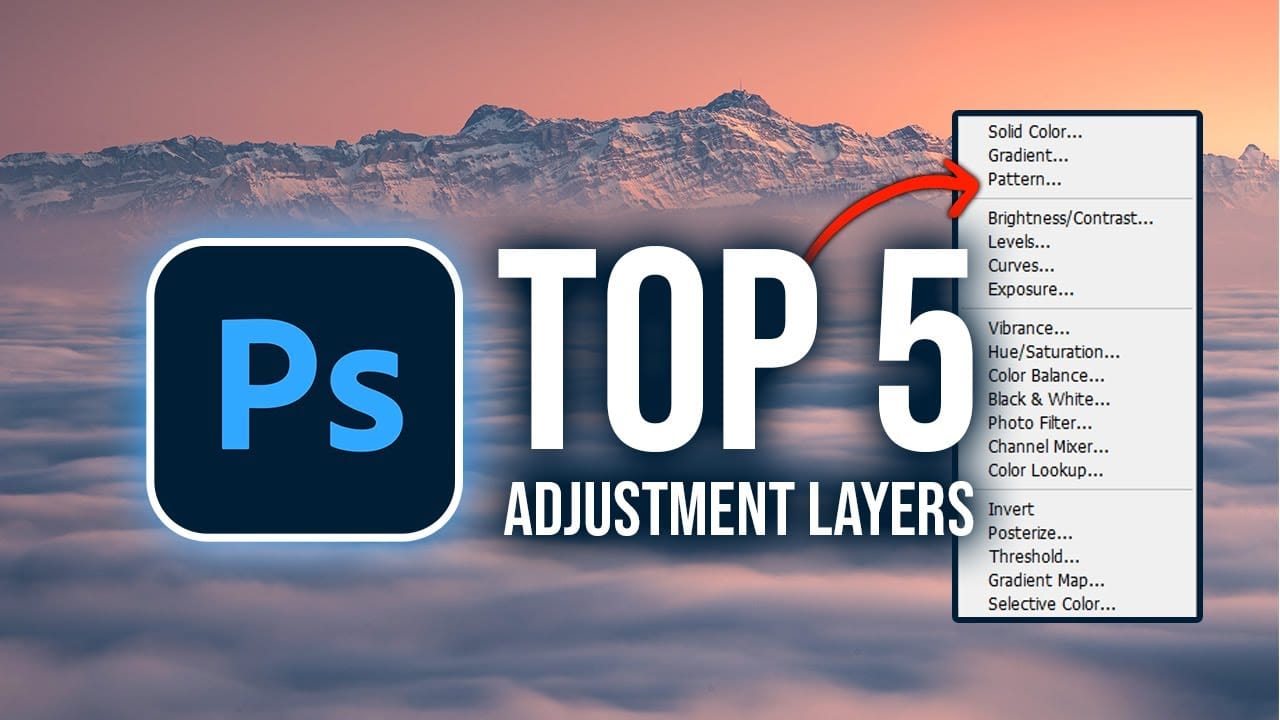
Master Photoshop Adjustment Layers for Non-Destructive Editing
Fine-tuning images without destroying original pixel data transforms ordinary photos into compelling visuals. Adjustment layers provide the flexibility to experiment with colors, contrast, and tones while maintaining complete control over every edit.
This comprehensive guide demonstrates how to harness Photoshop's most powerful adjustment layers for landscape photography, from basic contrast enhancements to sophisticated color grading techniques.
Watch the Tutorial
Understanding Non-Destruc
Rotate and Flip Images and Layers with Precision in Photoshop
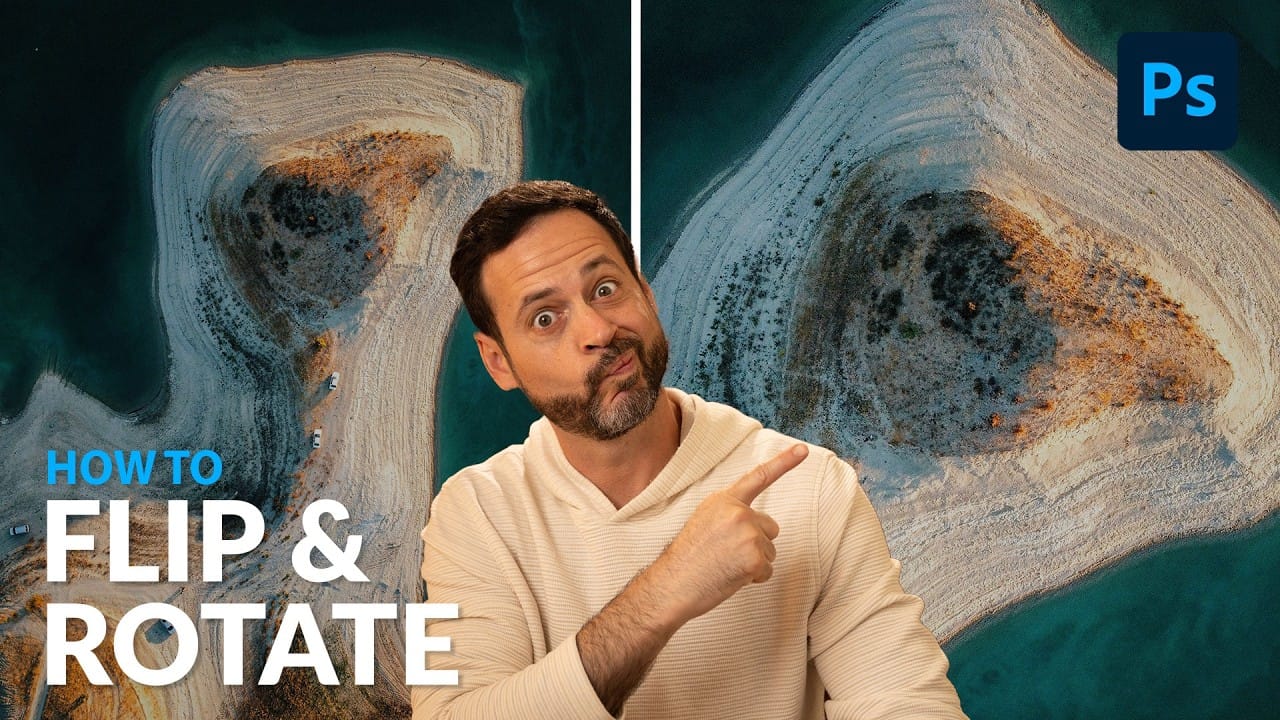
Often in image editing, photographs or design elements are not oriented correctly or require a creative re-orientation for a new composition. This common challenge can be frustrating when simple rotation tools affect the entire canvas, disrupting other layers, or when precise control over individual elements is needed.
This tutorial demonstrates two distinct methods for rotating and flipping images in Photoshop: one for the entire canvas and another for individual layers.
Understanding these a
Quickly Center Anything In Photoshop Using These 2 Methods
If you want to center an image or a piece of text in Photoshop, it can be frustrating not knowing where to start. In Photoshop there are a few ways to center and align your layers whether you want to work with the entire canvas or just a section of your photo.
In this Photoshop tutorial, you'll learn how to center your images and text to the entire canvas, while also learning how to make custom selections for aligning layers to more specific areas. To add a cherry on top, I'll also show you how