5 hidden Tips to make perfect Photoshop mask edges

5 hidden Tips to make perfect Photoshop mask edges

Achieving flawless cutouts and seamless composites in Photoshop often depends on one crucial element: clean mask edges. Rough fringes, jagged lines, or semi-transparent halos can instantly undermine the realism of any image. This video demonstrates powerful techniques to transform your selections from good to truly professional.

It provides five actionable tips, allowing you to meticulously refine and perfect your mask edges, ensuring your subjects blend effortlessly into any new background without tell-tale signs of editing.

Watch the Full Tutorial

Video by photoshopCAFE. Any links or downloads mentioned by the creator are available only on YouTube

Why Clean Mask Edges are Essential for Professional Results

The quality of mask edges significantly impacts the realism and professionalism of any composite image. Even with advanced selection tools, initial cutouts often leave behind subtle imperfections like color fringing, rough pixels, or semi-transparent halos. These seemingly minor flaws can draw the viewer's eye away from the main subject, making the image appear noticeably artificial. A crisp, clean edge ensures that the subject integrates seamlessly into its new environment, maintaining visual believability.

Professional retouchers understand that achieving a perfect mask is an iterative process, involving not just the initial selection but also meticulous refinement. This attention to detail transforms a basic cutout into an indistinguishable part of a new scene. It is about creating an illusion where the viewer perceives a single, coherent image rather than disparate elements hastily combined.

Effective mask refinement relies on understanding how light and color interact at the boundaries of objects. When dealing with fine hair, complex textures, or subtle gradients, the goal is always to achieve a transition that mimics natural observation. This level of precision is what separates amateur work from polished, high-end composites.

Practical Tips for Refining Mask Edges

  • Visualize transparency by adding a temporary stroke effect to your mask, making it easier to identify and paint away subtle imperfections.
  • Eliminate color fringing around your subject by utilizing the Decontaminate Colors option within the Properties panel for cleaner cutouts.
  • Achieve seamless blending by expanding your selection by one pixel, then feathering it by one pixel, and carefully painting on the mask while hiding the selection.
  • Refine rough edges by applying a small amount of Gaussian Blur to the mask, then using the Levels adjustment to choke the mask inward.
  • Clean up scattered bits and semi-transparent areas on a mask by applying a subtle Gaussian Blur, then using Levels to aggressively boost the blacks and whites.

More Tutorials about Photoshop Masking

Explore additional resources to deepen your understanding of masking and other essential Photoshop techniques.
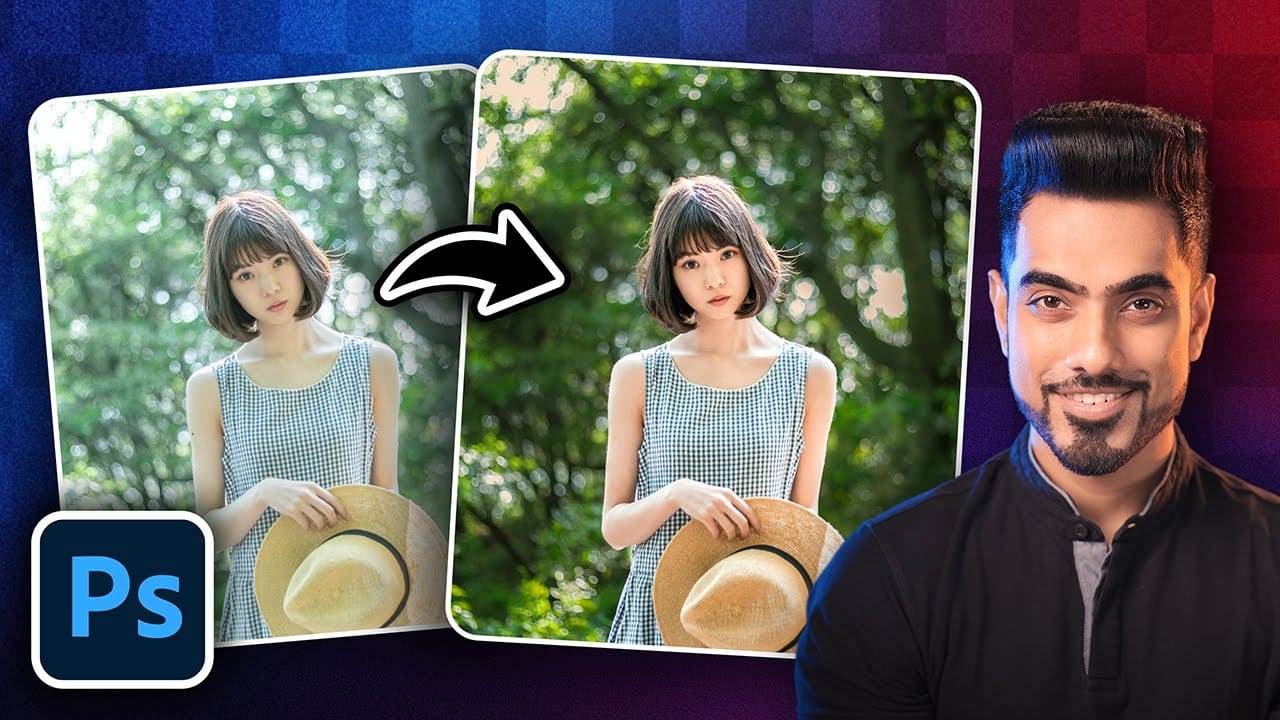
5 tips to make your photos better in Photoshop
Colin Smith from Photoshop Cafe shares a comprehensive tutorial on five essential tips to rapidly enhance your photos using Photoshop. These tips are designed to help both beginners and experienced users elevate the quality of their images with ease. One key aspect Smith covers is improving exposure. He demonstrates how to adjust brightness and contrast effectively to bring out the best in your photos, ensuring they are well-lit and visually appealing. Sharpening details is another crucial tip,
How to Create and Use Layer Masks in Photoshop
Layer masks represent one of Photoshop's most powerful non-destructive editing tools, providing photographers and designers with precise control over image visibility. Unlike permanently deleting parts of an image, layer masks allow for reversible adjustments that can be refined throughout the creative process. In this comprehensive tutorial, you'll explore everything from fundamental layer mask concepts to advanced techniques like mask copying, unlinking, and group masking. Learn how to use th
How to Use Photoshop's Smudge and Blur Tools for Perfect Masking
Professional photo composites often fall apart at the edges. Sharp selection lines and harsh transitions make even the best cutouts look artificial and fake. The solution lies in two overlooked Photoshop tools that most editors dismiss as destructive and useless. The smudge and blur tools become powerful allies when applied to layer masks instead of image pixels. This approach creates natural, realistic edges that match the original photo's depth of field and lighting conditions. Watch the Tut
5 Essential Photoshop Techniques for Better Portrait Editing
Portrait editing often feels overwhelming, especially when trying to balance natural-looking results with professional polish. Many photographers struggle with where to start and which adjustments will have the biggest impact on their images without making them look over-processed. This tutorial covers five fundamental Photoshop techniques that will immediately improve any portrait. From creating better subject focus to color correction and skin retouching, these methods provide a solid foundat

Get tutorials & freebies delivered to you.

Subscribe to the Photoshop Roadmap newsletter, a weekly roundup of new tutorials, insights and quality downloads, trusted by 6500+ readers.

You might also like

How to Create Circle Cropped Photos with Transparent Backgrounds in Photoshop

Circular cropping transforms standard photographs into clean, professional profile images perfect for websites, social media, and presentations. The frame tool method creates non-destructive crops with transparent backgrounds that export seamlessly across different platforms. This streamlined workflow eliminates the need for complex selections or masks while maintaining full control over image...

How to Use Generative Upscale to Restore and Enhance Low-Resolution Images in Photoshop

Low-resolution images often limit your creative projects, especially when you need sharp prints or high-quality displays. Photoshop's Generative Upscale feature transforms small, pixelated photos into crisp, detailed images using AI-powered enhancement. This tool offers three distinct AI models, each designed for specific image types—from landscapes and portraits...

How to Use Harmonize to Automatically Match Lighting in Photoshop Composites

Creating seamless composites traditionally requires hours of manual color correction and lighting adjustments. The new Harmonize tool changes this by automatically analyzing your background and matching your subject's lighting, shadows, and color tones with a single click. This AI-powered feature eliminates the need for complex adjustment layers and...

How to Use Adobe Photoshop in ChatGPT for Photo Editing

Adobe Photoshop is now integrated directly into ChatGPT, allowing you to edit photos using simple text descriptions. This new feature lets you enhance images, apply creative effects, and make targeted adjustments without needing a Photoshop subscription. You can describe what you want to change and fine-tune adjustments using familiar Photoshop...

How to Fix Skin Tones in Photoshop - Complete Guide

Skin tones can make or break a portrait, yet color casts and uneven lighting often leave subjects looking unnatural or flat. Whether dealing with mixed lighting conditions, camera white balance issues, or post-processing mishaps, getting skin colors right requires a systematic approach that works consistently across different scenarios. This comprehensive...

You’ve successfully subscribed to Photoshop Roadmap
Welcome back! You’ve successfully signed in.
Great! You’ve successfully signed up.
Success! Your email is updated.
Your link has expired
Success! Check your email for magic link to sign-in.